Categories
Background Business Leadership People

Wow – I’m a millennial from a different time

According to an article in Business Insider millenials are killing certain businesses and I am glad to say that most of the ones being ‘killed’ are ones that I am cheerfully glad to see the back of. And I suspect most people of all ages will be. So here’s my take on some of what’s going on

  1. Casual dining such as Applebees or Buffalo Wild Wings are losing out and I can understand why. No discernible taste, poor locations and a standard of service that is literally non-existent. Avoid at all costs
  2. Beer is on the way out. Millennials prefer wine and I can confirm this is entirely fine with me. I will now be able to get a place at the bar and get served with no teenagers trying out their latest red bull concoction. Long live millenials avoiding beer
  3. Napkins – apparently millenials prefer paper napkins to cloth napkins. I have no idea why anyone would prefer paper napkins so in this case millenials have it. I’ll carry on using the washing machine.
  4. Breastaruant chains like Hooters. No one of any age should be seen in or around a hooters. Of any age. It’s just wrong and I am with millenials all the way here.
  5. Millennials don’t like cereal because its hard to clear up. Well a staring point might be not to use paper napkins but I am not sure why clearing up breakfast is a particular challenge as no other meal is mentioned. Perhaps all millenials start out with good intentions about clearing up breakfast, end up with a handful of sodden paper towels and simply give up tidying up?
  6. Golf is under pressure as millenials find better ways of spending their time. And while is it obviously not clearing up their apartments I find the fact that they are killing golf to be worthy of medals. Golf has to be the best way to ruin a walk in the country but apart from that it serves no useful purpose at all. Except perhaps keeping anyone who thinks plus fours are a good thing away from the rest of us. All power to the millenials
  7. Motorcycles. Well who does want to dress up to dress up in tight leather and fall over as soon as it rains or you go round a corner. people who like motorcycles probably like golf and should be kept away from sensible people.
  8. Fabric softener. I find it odd that millenials in particular are running away from fabric softener but according to Procter & Gamble’s head of global fabric care, millennials “don’t even know what the product is for.” Which is a bit odd as the clue is in the title of the product and its a bit difficult to see how a company could make it any easier to understand what it does. But again I am with the millennials here. Another round of chemicals clogging up your pores simply so your towel apparently feels a little nicer doesn’t make a lot of sense to me
  9. Banks – nothing needs to be said. No one likes banks. They are simply horrible
  10. Gyms. I am with millenials here. never having set foot inside a gym I can completely understand why no one else would want to.

Now I come to think of it I am a millennial after all. Just from the wrong millennium.


Categories
Business Change Communication Customers Leadership Risk Self Driving Cars Technology trust

The business of trust.

Companies and businesses have a problem – Trust. Put simply there is a decline in how much trust is being placed in business by customers and society in general. And a business that isn’t trusted isn’t going to survive for long. But is trust that important?

I think so. Customers are spending more time researching the companies they buy from, and the fact that so much information is available on line, opens up a business to a lot more scrutiny than previously possible. As customers are subject to exponential levels of change they will look to anchor themselves through relationships based on trust.

Would you go to a Doctor you didn’t trust?

And businesses play a huge role in society, providing income and rewarding places to work, generating wealth and making tax payments to help governments support their chosen areas of investment. The problem is partly guilt by association. As Edelman reported there is a collapse in trust in 4 of the major institutions (Business, Government, NGOs and Media) in many countries around the world.

At the same time however, businesses face some challenges that while not specific to industry will have a large and potentially dramatic impact. The 4th Industrial Revolution (4IR) is beginning to reshape what business is and what it does and how it does it.

And trust is going to be come one of the most important topics businesses will have to deal with.

Categories
Business Communication Customers Leadership Self Driving Cars Technology

Trust me – I’m in business

Trust is something that is extremely important in business. Whether it is between colleagues or between companies and their customers or between companies and their suppliers trust underpins everything that is written down in a contract. Without trust business simply doesn’t work as well as it should.

Of course trust becomes even more important when dealing internationally with people from different backgrounds and cultures.

So let’s get a definition written down

Trust as a noun is the firm belief in the reliability, truth, or ability of someone or something.

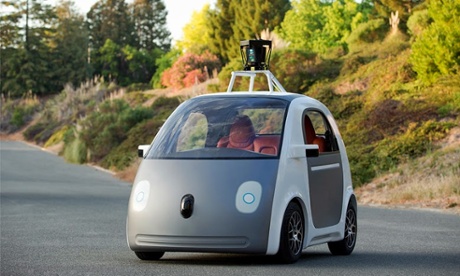
The little Google Car pictured above is a prime example of a growing need to trust. In this case trusting a software engineer who has written the code that is helping you navigate your way around town. As I talked about in ‘Can sheep drive?‘ we will all to have a lot of trust in technology going forward.

But what about trust in business. Well there we seem to have a problem.  According to a report by the World Economic Forum – We’re losing trust in business. How can we get it back? people are losing trust in business. And while this is not really a surprise with the focus on fake news currently it does present serious challenges, particularly to businesses that operate outside of their locality ie where the owner or staff are not known by their customers or suppliers.

The article goes on to highlight a number of areas businesses need to think through such as

  1. how to focus on developing a narrative about the business that is not just about shareholder returns explaining how the business contributes to improving society
  2. how to actually communicate this narrative to a broad range of people who might be interested in the business and what it is doing for society and
  3. actually doing something about it

And while I think the irony of the World Economic Forum highlighting a lack of trust in business is interesting in itself the article seems to miss one very major aspect. The almost complete focus on the investor and shareholder above all others. The quarterly reporting cycle focusing as it does on numbers and shareholder returns is probably the biggest contributor to a lack of trust.

Perhaps its time for a quarterly reporting process on what value has been added to society rather that just focusing on the eps?

Anyone have any other ideas?


Categories
Change Communication Customers People

I guess we have a way to go…

There are more men on corporate boards named John, Robert, William or James than there are women on boards altogether – The Washington Post

As you will have seen from a previous post – Let’s take a stand –  I am a strong supporter of inclusion. Articles like this one reinforce the need to keep trying to make a difference.

And there are many reasons why it makes sense to do so for any business. Apart from fairness alone (50% of the population are women) results improve for more balanced companies and decision-making becomes more rounded. Groupthink is avoided.

And with more women running businesses its possible they will want to deal with companies who recognize this fact. According to research undertaken across East Asia in 2013 between 38% and 47% of all SME’s businesses are owned by women. With SME’s accounting for the majority of economic output in most countries women will have an ever growing impact.

Probably sensible to be prepared then.

Change will take time but let’s keep going.


Categories
Uncategorized

For cultural sensitivity training – take a taxi

I have to admit that I probably take too many taxi journeys in Hong Kong. And the only justification I really have is that they are a very easy and cheap way to get around town. I know that they are not the most environmentally friendly alternative – although even in Hong Kong there are now a few Prius taxis, and that they clog up the highway but I still take them.

They work and that’s very important. And not only that, as I have discovered taxi’s are a great way of learning a bit about a different culture.

Like taxi’s all over the world the way the Hong Kong system works remains a mystery to me. Why for instance does a taxi driver need 6 or more phones on the dashboard? Apparently to make sure that they can give a personal number to a preferred client who can call them directly. I suspect no client is ever going to know that someone else is also using the same number but that’s Hong Kong for you.

I am fortunate to live in an area where local taxi drivers tend to park overnight. Great news in the morning if you get your timing right. Hint, leave at 7 to 730am. Get it wrong and you can be waiting for a while. Just don’t think about trying to get a taxi at 4pm as this is shift change time.

And if you’re in Hong Kong I’d really recommend you download the Hong Kong Taxi App which is an absolute lifesaver.

Oh and sit in the back.

In Sydney however sit in the front. It took me a long time to work out why when I got in a taxi the front seat was pushed so far back. Coming from the UK where you actually can’t sit in the front of a black cab I’m afraid I always sit in the back. Which in Sydney is the wrong thing to do. For some reason the driver wants company; and wants to talk to you. Now taxi drivers in London are known for being talkative but I’m afraid are just not in the same league  as in Sydney – and I never thought I would say that. So be prepared to talk. And being new to the country and not knowing anything about local politics/sport/celebrities/weather etc. is no excuse for silence.

In Italy, where I have just come back from, sit in the back, put a seatbelt on and if I may suggest, a crash helmet and full body armor. Now I know stereotypes are dangerous but I have not been as scared in the back of a taxi for a long time, nor as close to the car in front. I thought we had actually got into the back of the car in front at one point. I wonder if you order your dents at the same time as you order your car to save the hassle of actually crashing into someone.

New York is of course a completely different experience. You either climb into the back of an old Ford Crown Victoria or the slightly newer Ford Escape. Remarkably both are rubbish which is quite an achievement. The Victoria has no suspension and the Escape (never was a name less deserved) has no room in the back. Literally no room, as the screen that is installed between the front and the back takes up all the room. Cutting your legs off is the only way to fit. And both taxi’s come with a driver who will almost certainly have no idea where you are or where you want to go. In a city like New York that is largely a grid pattern it is a mystery how authorities manage to find so many people with no sense of direction. I really think I should have been paid by the driver in some cases.

However the prize for the best taxi service goes to (drumroll please) Bangalore.

I suspect some might be surprised by this choice but let me elaborate. As service goes picking my bags up from the front desk of the hotel isn’t that uncommon. Nor is getting my cases out of the back when we arrived at the airport. What was slightly unusual was the insistence of the taxi driver to accompany me to the check in desk, and then thru security, and then thru the gate and onto the plane, and finally waving goodbye only after providing me with a glass of champagne. And then only accepting what the meter showed.

Taxi’s teach you something about a country and its people. If you want to know more get a bus. But that’s a whole different story.

Let me know your taxi experiences

Categories
Change Customers People Risk

These CEOs make more than their companies pay in corporate taxes – maybe its time for a vote?

The corporate tax rate in the US legally ranges from 15 to 35%. Many companies end up paying far, far less. In a report released today, the Institute for Policy Studies found (pdf) that seven of the country’s 30 largest companies by revenue paid out more to their chief executives than they did in corporate taxes in 2013, despite the […] http://qz.com/298543/these-ceos-make-more-than-their-companies-pay-in-corporate-taxes/ I repost this article with one intention in mind – to get people talking and discussing the issues raised. Whatever the situation, and companies pay taxes in a myriad of ways that are often overlooked in articles such as this it, the headline alone should be enough to prompt questions on why this should ever get published. Why should a CEO be accused of being paid more than the tax bill of the company. What’s it to you and me? I’m sure the CEO works very hard for their money (I almost wrote his money but that would been unfair – pretty accurate but unfair) . So what is it to you and me? Well actually its a lot and it highlights the growing disconnect between those with an appearance of being ‘At the Top’ and the rest. And unless that gap is narrowed or some sense of fairness rebuilt the inevitable will happen. People will vote for change or simply no longer support companies who do not appear to be being fair. And this pressure for change is growing. Back in 1993 the Royal Society for the encouragement of Arts, Manufacturers and Commerce (RSA) ‘initiated a business-led inquiry into ‘the role of business in a changing world’. The objective was to develop a shared vision of the company of tomorrow. The findings of the Inquiry, published in 1995, introduce the concept of an inclusive approach to business success in which a company:

  • defines and communicates its purpose and values
  • develops a unique success model
  • places a positive value on each of its relationships
  • works in partnership with stakeholders
  • maintains a healthy reputation.’

For many of us in business today the idea of values and purpose, stakeholder relationships and maintaining a healthy reputation are all concepts we would understand. But so many of our companies today have clearly turned these into a set of words on the wall. Ignored by most people except in the corridors of the CEO where it makes sense to be an acolyte if you want to keep your job, but in most cases meaningless; possibly as witnessed by the fact that CEO’s allow their companies to be in a position where they pay themselves more than they apparently pay in tax. The Tomorrows Company research, based on the above findings advised companies that they would need a license to operate – that license being ‘granted’ by the buyers of goods and services from he company. It seems to me that, unless some businesses begin to change how they go about doing things, they will find their license to operate being taken away. People will begin to vote with their wallets – the ultimate weapon of mass destruction for any business. And quite frankly many of these businesses will deserve it. People have seen the global financial crises impacts on their daily lives and have aright to question whether it could happen again. And at the same time they see articles published like the one above that might suggest nothing, at least in the corporate world has changed much. People  will vote – the question is only, when

Board Notes New Zealand - Risk, AI, Sustainability

Insight for board directors and C Suite Executives

What Ever Next

The business world has so many opportunities to reshape itself and drive better outcomes - we are only scratching at the surface of the change agenda and all the possibilities open to us. What ever happens next must embrace how we all work better together, how we are organised, the things we do and the many tools we use to make the change. Let’s make good things happen

Organic Gardening Advice

Grow Better Food, Naturally

The Renegade Press

Tales from the mouth of a wolf

Little Fears

Tales of humour, whimsy and courgettes

Steve Rose, PhD

Gain Long-term Freedom From Addiction

Seeking Delphi™

The Future Lives Here

WordPress.com News

The latest news on WordPress.com and the WordPress community.