
Categories
Change Leadership Musings

Build Back Better? Try the M25 first

Photo by Alex Knight on Pexels.com

I was sitting in the traffic on the M25 yesterday staring at 2 miles of red taillights when I was overjoyed (?) to hear a government minister tell me how much he was keen to build back better following Covid 2019. Another case of the video not matching the audio which is becoming a common problem at the moment across the UK. A lot of talk about building back better but little real activity as the country heads back towards some form of norma.

It feels like we are about to miss an opportunity that only comes once (if at all in a generation). We have the opportunity to change the direction we have bene heading and do more to bring in the environment and the disconnected into the decision making processes.

But amongst business and government leaders across the world there is a looming decision that many have yet to take. Are leaders willing and able to change what they do and how the inspire the change we need? Are Leaders going to Lead?

And it is going to depend on what lessons you have taken away from the Covid crisis. Do you see it as an interruption to your sense of direction or do you see it as imbuing you with a new sense of purpose driven by the change that you and millions of others have been forced to go through over the past 6 months. Is everything going to return to the way that it was with a few tweaks around the edges (face masks and less office space for example) or will business and individuals begin to think differently and to really mean it when they say they want to build back better.

Photo by Alexas Fotos on Pexels.com

Building back better requires a lot of change and change is hard. Change requires a loss of control, it requires anger, pain and acceptance, a grieving for the old and a realisation that the new is possible and that it will be better. It requires significant effort. And the starting point, the loss of control (or the loss of existing norms, processes, relationships etc) is usually the most difficult thing to accomplish. And the bigger the change desired, the more people effected, the more complex the change being sought all leads to a greater desire for the status quo. It is for this reason that the term ‘create a burning platform’ is used so much in business to encourage people to let go of tradition.

So you can imagine how hard it is to change a country. It is hugely complex with vast numbers of people desperately clinging to the past and in many cases for very good reasons – the past works. Freeing up people to look to a new future is really hard. Which is why Covid 19 provides an opportunity that we should not waste.

Covid 19 forced the whole country to let go of the past almost overnight. Something that has probably not happened since the outbreak of the second world war. We have been through the toughest part of the change process already.
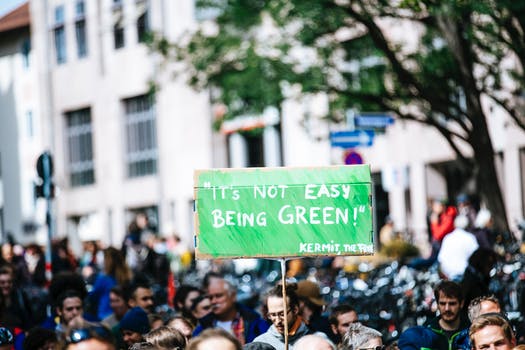
As we all adapted to Lockdown in the UK people began to enjoy the silence of less cars and planes, the ability to ride a bike and spend time with family, balancing work with personal life more effectively than they have been able to before. All the while a number of businesses maintained or improved their productivity and at least retained their levels of customer service. Do we really want to go back to the old ways

I am acutely aware that this has been a very tough time for a lot of people who are worried about their future and what and where they will be in a months time, let alone across the timelines required to build back better. But going back to the way we used to be with less in jobs and with a rapid growth in digitisation, automation and robotics coming (companies will be running quickly to automate so as to be less reliant on people who get sick) isn’t going to help these disconnected people either. Maybe creating role in sustainable enterprises that protect and enhance the environment or local communities might actually be a better idea?

I don’t want to think about all the effort people went through changing overnight to cope with the challenges of Covid 19 going to waste. That would be wrong and I want to lead in a different direction? And I hope to be trusted to do so

So will other leaders lead?
Categories
Change Communication Leadership

Leadership – Just abandon your family?

Leadership, or getting people to change can be tough. But being dumb seems to be a whole lot easier. In this article from Business Insider (BI) you’ll find a great example of what I think we can all agree is pretty dumb leadership.

As I have argued before leadership is not something that comes from your position in an organisation although the more senior you are does tend to give you an implied authority to lead. We expect people further up the hierarchy to lead. That is surely their role. So if you’re a CEO it is expected that you lead. Not that all you can do is shout.

But from what I am seeing more and more leaders, rather than leading are simply hectoring or demanding ultimate loyalty.  What I am seeing more and more is the need of some of these high level leaders to have you put them and their role in the business above everything. Above what you are working on at that moment, above your social life, your weekends and above all above your family.

And it is more and more about them and less and less about creating something together as a team.

And this makes no sense. Because what you want if you’re leading is to change something. And to change something you need people give more than they absolutely have to.

The more hectoring that goes on, the more it is about me the leader and making me feel good the less effort anyone is going to put in. I particularly like the definition from Aubrey Daniels International which talks about Discretionary Effort.

Discretionary effort is the effort people can put in over and above what they absolutely have to do. And as a leader who wants to change things you need people to put in extra effort. Change means by definition doing something that is above what people absolutely have to do.

Being a leader means having followers. And followers want to be respected by their leader for what they do and for their own lives. If it’s all about the leader then it simply isn’t leadership.

The article from BI identifies a CEO type that really needs consigning to history. I was asked what I would do in an interview if I was asked to put the CEO above everything. I would simply walk out of the interview. That is not a company that I would work for,

Let me know what examples of good and bad leadership have you seen?


Categories
Business Change Communication Leadership People

Leaders shouldn’t be so sad….

I met up with a colleague in the office today who relayed to me that he’d just had dinner with someone who left the company a few months ago. Meaning it to be a positive statement my colleague regaled me with stores about how his friend was now doing all the things he didn’t have time for when working such as

  1. seeing family
  2. getting fit
  3. spending time on his hobbies
  4. enjoying watching his family grow up

And all I could think about was how sad that sounded. Sad that it was only when his friend was between jobs that he managed to find time for the rest of his life. And yet so much of what leaders seem to expect is to work all hours that exist. And this rubs off on their teams who get equally caught up in the working all hours syndrome mainly because their boss does the same.

I once worked for a leader who wanted to know what was going on continuously. He worked all hours and wanted everyone else to do the same. He demanded to know whatever was happening before anyone else. Presumably because this made him feel good. After a month of 24/7 working (at least that’s what it felt like) I picked up the phone to him and had one of the most difficult conversations I have had. I simply told him that I was not going to talk to him every hour, txt him every 15 mins and make sure he had regular emails. I let him know that I felt I was employed as a trusted officer of the company and once I had agreed with him the objectives he should trust me to get on with it.

He really didn’t like it. The silence on the phone spoke volumes

But he eventually accepted what I’d said and we then worked in the way we’d agreed and despite his nervousness it actually worked quite well.

Sometimes you need to lead your boss.

Or as I sometimes tell my colleagues – boss your superior.


Categories
Business Change Customers Leadership Service

Jeff Bezos is out to crush Blue Apron — Quartz

I reposted this simply as I have a good friend who works at Blue Apron.

I have a huge amount of respect for Amazon and what it does. From a retailer of on line books that once advertised it had 1m titles to a retailer that seems to cover almost all areas of commerce through to a cloud computing company and now a fresh food store, Amazon does it and seemingly does it well. All with amazing customer service.

Most businesses will admit to prioritising certain aspects of their business based on an argument that it is impossible to do and pay for everything that is needed. While I am sure Amazon prioritises aspects of its business it is fair to say that from a customers perspective you don’t tend to see the impact of this.

And that is a sign of a good business.

Blue Apron has an Amazon problem. Two weeks before the meal-kit company debuted on the New York Stock Exchange, Amazon inked a deal to buy Whole Foods Market for $13.7 billion. One week after the IPO, Amazon Technologies, a subsidiary of Amazon.com, registered a trademark in the US for the phrase, “We do the prep.…

via Jeff Bezos is out to crush Blue Apron — Quartz


Categories
Change Communication

24/7 Leadership and the Burning Platforms Index

illustration of fire extinguisher
Use in case of burning platform – turn this on the leader

Leaders don’t set things on fire.

I am struggling. I have been looking at so much research about leadership and leaders and so much news and information about the topic that I find it remarkable that there still doesn’t seem to be a definition of leadership or what a leader actually is.

What I do know is that there is a fervour amongst leadership devotees that their particular brand of leadership is the best (for which read) the only one. And anyone who has an alternative view of leadership is simply wrong. I have seen friendlier debates between the US and Iran.

Board Notes New Zealand - Risk, AI, Sustainability

Insight for board directors and C Suite Executives

What Ever Next

The business world has so many opportunities to reshape itself and drive better outcomes - we are only scratching at the surface of the change agenda and all the possibilities open to us. What ever happens next must embrace how we all work better together, how we are organised, the things we do and the many tools we use to make the change. Let’s make good things happen

Organic Gardening Advice

Grow Better Food, Naturally

The Renegade Press

Tales from the mouth of a wolf

Little Fears

Tales of humour, whimsy and courgettes

Steve Rose, PhD

Gain Long-term Freedom From Addiction

Seeking Delphi™

The Future Lives Here

WordPress.com News

The latest news on WordPress.com and the WordPress community.