Brief blog post today and about my favorite subject, Insurance – sorry to all those people reaching for the unfollow button.
So apart from a strong stomach what else does it take to work with insurers? How do you get the best out of them if you’re running a Managing General Agent or some other delegated authority arrangement?
By way of help and advice I contributed to some work being undertaken by Evermore Digital. The blog link os below. It’s worth a quick read but feel free to make contact if you need any more advice or support.
It’s tough in the UK market (amongst others) at the moment with insurers again recognizing that profits on underwriting are important. This is driving prices up, capacity down and a focus on core coverages. It’s bad enough for intermediaries but a B nightmare for customers. And at the same time as the industry has been found wanting on Bi coverages from Covid losses. So making sure you get snd keep high quality capacity is critical for any Delegated Authority holders or MGAs.
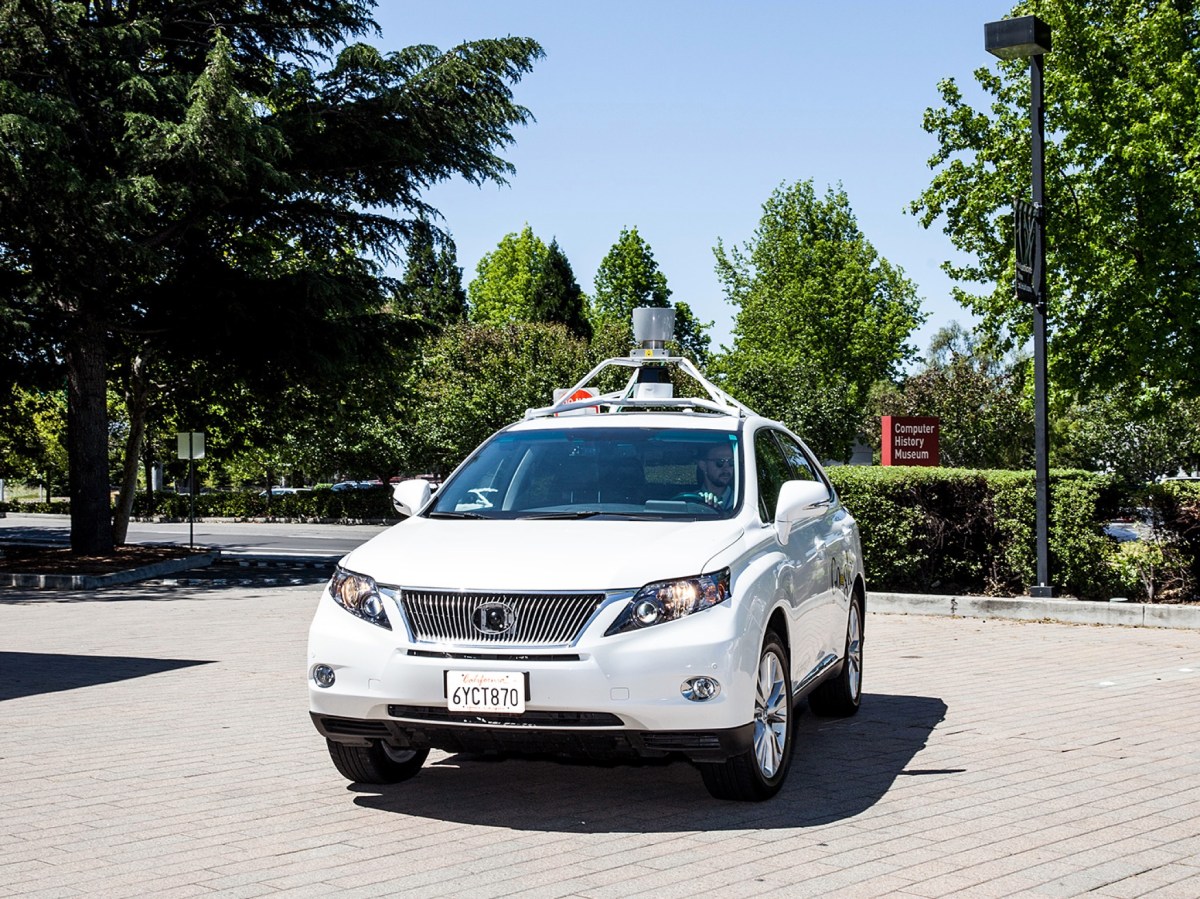
In all the noise and excitement (not least for this blogger) around self driving vehicles one thing that is pretty clear is that how people have fun (for which read the increasing chance of a seriously spectacular crash) in cars is going to change. At the very least we will have to find ways of e enjoying ourselves that don’t involve simply driving them.
And of course students have managed to find the way. From Stanford comes this great article about a new fun thing to do with self driving cars. Although what else you can do in this car while its in action is going to require some thinking through.
Ok that might have been a little naughty of me – just trying to grab some attention. It gets lonely out here.
Autonomous vehicles really are the flavour of the month and the pace of change is simply amazing. Every week there is a new announcement about an advance in the technology. And despite this the one announcement that we are waiting for, despite what I am pretty sure was an agreed ‘leak’ is the one from Apple confirming their entry into this market.
While on the subject of Apple (and if you’ll allow me a little diversion here {did you see what I just did}) I can confidently predict that in Hong Kong at least the new iPhone 6S will be a huge hit. And how do I know this? If you take a walk past the Apple store in Causeway Bay you’ll know why. The legion of resellers who stand outside the store selling the iPhone that they have just bought is the clue. So you can go into the store and buy a phone or pay presumably more to buy one from a street seller not 5 paces from the door to the store. The last time this happened was with the launch of the iPhone 5 and Apple themselves went on to mention that demand was extremely strong in Hong Kong. You heard it here first.
As I understand it Apple usually makes major product announcements once or twice a year so we may just have to wait for news. But if the length of lines and the resellers are anything to go by for a phone I confidently predict (here I go again) that should they develop something it will probably sell extremely well in Asia.
Hopefully he title has piqued your interest and so I would like to introduce an old colleague and friend of mine Colin Gautrey. Colin has been one of those individuals who I probably talk to less than once a year and yet who’s advice and support I value a huge amount. His focus is on Influence a topic that is one of the most important for anyone to understand. Being able to influence others, in a business or personal environment is one of the key skills that we all need to learn.
So please read on and see what you think. I spend almost all my days influencing people in 8 countries in Asia to do different things in different ways. Its probably the only way to really make things happen in any organization of more than 2 people. As Colin says
‘When you have to engage with someone, and you have a difficult message to deliver, a decision needs to be made about how direct and assertive you can be. Put another way, you need to decide how tactful and diplomatic you have to be to avoid causing offense.
One of the issues that business in general struggles with, as do many other areas of society, is the issue of equality. It’s something that we all know needs to be dealt with and there is a lot research that will tell you that business performs best when the company is truly representative of the society in which it operates.
Doing something about it seems to be beyond many people and businesses. But even small steps can help.
So I am going to take a stand on this issue. I’ve signed up for the HeforShe campaign being run by the UN; a campaign that seeks to involve both men and women in making the issue of equality one for the history books.
I’d like to encourage everyone to join in.
And if you need some more background on why this issue is important please watch the video. An obviously nervous Emma Watson gives some background on why the issue is important and why its an issue for all of us.
Sometimes internet stories get rejuvenated for no apparent reason. I have no idea how or why this happens but it can be fascinating to see what is ‘trending’ at any point in time. And todays story is one about fridge magnets and how they can become killers. Now I am the first to admit that there are a few fridge magnets in the house although they actually reside on the front of the oven. A spaceman from the US, a cocktail menu from Singapore and a polar bear make up the current contingent. I don’t know where the polar bear came from but he seems happy.
However while the polar bear is happy I am wondering if I should be anymore – until today I had never considered the polar bear and friends could be a killer.
I wondered in an earlier blog about whether Instructions are important or not. They are.
I was recently in the UK and as usual when there I rented a car. This part of the process is very simple. I apply on line, get the confirmation, get an email when I arrive telling me which car I have and where its parked. Ignore that email and go find the actual car that they want me to have – a Mercedes Model B . Usually from arriving at the garage I am on the road in under 5 mins. This is great customer service.
However, in this instance, getting the car to move became a whole different problem. Nothing is the same anymore.
At the office I work sits one of the most fearsome devices known to human kind. Well, me anyway. The automatic coffee machine.
Image courtesy of Vichaya Kiatying-Angsulee / FreeDigitalPhotos.net
You would think getting a coffee is a fairly easy thing to achieve. Yet it has taken me more than two years to finally get the coffee I want. And it was, and I am sure you’re ahead of me at this point, all my own fault. I kept saying to myself, ‘how difficult can it be to get the right coffee?’
Well actually very difficult.
The coffee machine has a number of buttons. At first glance (and for the next 300) it looks simple; if you push the top button you get decaffeinated coffee and if you push the second one down you get regular coffee. It all seems simple so far except that when you push the top button nothing happens. Push the second button and you get a hot cup of something that smells and looks a little like coffee. But not something I want to drink.
The trouble is I want decaffeinated. And over the two years that I have pleaded with and begged this machine, it failed to deliver what I wanted.
Last week I went through my usual ritual and nothing happened. I pushed the decaf button and nothing, zip, nada, nowt (that’s a North of England term – see even my blog is globally educational). I stabbed the button again in the hope that somehow it was all in the timing of the button press but nothing happened.
At this point, spying the maintenance man, I did something that men typically find very difficult to do. I asked for help.
‘Read the instructions on the front’ was the reply. Well if it was that simple I would have sorted it out a long time ago so really what use was that? Except it was very useful indeed; standing back from the machine I took a look. And there in front of me were instructions on how to get the coffee I want – press the top button followed by the second button. Sure enough two presses later I had a cup of decaffeinated coffee. Almost two years to the day and after asking for help, reading the instructions, and pressing the buttons in the correct order, I finally had what I wanted.
And a thought struck me – how many times do we do things in a way that is more complicated than necessary (or just give up) simply because we have never asked for help, or read the instructions? I recall that during my time as a COO I was always struck by the fact that the same process, for example issuing an insurance policy, could vary between 20 minutes in one office and two days in another. People would blame the process when in fact it was more about the lack of training, a refusal to ask for help, or lack of clarity around the instructions.
So what?
If you’re responsible for a customer service, whether its a coffee machine or an insurance policy, spend as much time on making sure instructions are clear and on training your people correctly, as you do on developing the product you sell. And, whatever your role in an organization, take responsibility for training yourself. Shout loud and long when there is a lack of support or training. You might be surprised when people actually listen.
While my lack of decaffeinated coffee didn’t impact customers it probably impacted my colleagues – my having three cups of regular coffee is not going to make their lives any eaiser!
So I can now get the coffee I want. Shame I haven’t yet mastered my laptop with its 500 page instruction manual, all on-line and in most parts completely unintelligible.
And thats a story for another blog.
Anyone else out there ever gone against their natural tendencies and asked for help? What was the result?
I have long been interested in the upside and downside of risk and reward. This is nothing more than a long winded way of saying that you win some you lose some. Managing the chance of either of these outcomes is what being in business is all about. But we can often get carried away by only seeing the negative aspects of risk.
But risk can have upsides and worrying constantly about the downside means we lose sight of opportunities.
One of may favorite signs of an over zealous approach to managing risk – well making sure you can’t be sued and that is not the same thing as managing risk – can be found in the bathrooms in New York – ‘Warning – This Door May Open.’
When I first saw the notice I couldn’t help but smile, its a notice that states the obvious. It is after all a door and it is therefore likely that it might open at some point in time. In fact as I was standing in the bathroom hoping to get back to work I was relying on the door to open. The word ‘May’ was a bit of a challenge implying as it did that the Door ‘May Not’ open and of course I had no way of knowing what would persuade it to open. However taking courage from having been present for many door openings and remembering that it never seemed that difficult I reached out, grabbed the handle and pulled. Door open, I walked through and the rest as they say, is history.
After a bit of reflection I realized that this warning in some ways reflected the best and worst of how we think about risk today. By its very nature there is a chance that the risk may happen (or in this case the door may or may not open). Risk is all around so reminding ourselves that risks do actually occur should help us think about how we assess , understand, and consider risk. The fact that a risk can occur and that this can turn into a loss of some kind should be a sobering reminder that we have our own responsibilities to understand and assess what we do on a day to day basis. It should also prompt us all to think about the positive aspects of risk – the door may in fact open.
But the fact that a risk may occur should not in any way stop us from going about our business. So as a reminder that risks can actually turn into something bad and that we have some element of control over how we treat these risks the warning on the door is a good thing.
The downside of a warning like that is when it is used as a way of apportioning blame when something happens. “I told you the door might open”.
If businesses continually feel that the role of government or society in general is to tell them off for something they did then we continue to encourage a risk adverse attitude. And a risk adverse attitude eventually leads us to take as little risk as possible. Business comes to a halt and a slow (and sometimes rapid) decline sets in.
And for a society all of a sudden we reach a conclusion, collectively, that taking a risk might be a bad thing.
But risk is what we do. If we don’t take risk we cannot find any positive potential nor, and this is the most important point, can we learn from mistakes. Learning from what went wrong as well as what went well is what underpins a great business.
So the door may open and that might be a good thing.
The business world has so many opportunities to reshape itself and drive better outcomes - we are only scratching at the surface of the change agenda and all the possibilities open to us. What ever happens next must embrace how we all work better together, how we are organised, the things we do and the many tools we use to make the change. Let’s make good things happen



 The Burble